 Comments were due September 3, 2013, for those individuals and organizations desiring to comment on the FCC’s “Notice of Inquiry” to assess its current radiofrequency (RF) exposure guidelines.
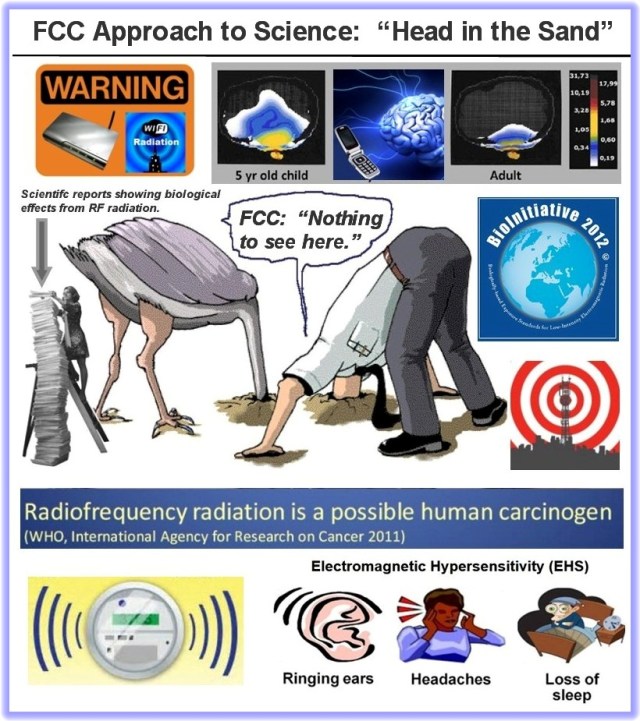
Comments were due September 3, 2013, for those individuals and organizations desiring to comment on the FCC’s “Notice of Inquiry” to assess its current radiofrequency (RF) exposure guidelines.
 Frank Clegg is the CEO of Canadians for Safe Technology (C4ST, formerly Citizens for Safe Technology), and the former president of Microsoft Canada. Mr. Clegg recently wrote a reply to an article in the Huffington Post that dismissed claims that Electromagnetic Hypersensitivity (EHS) was a true illness. Continue reading
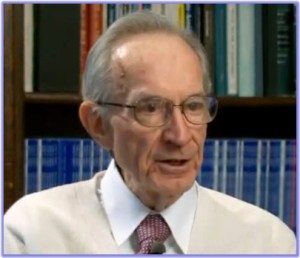 Oklahoma City NewsChannel 4 traveled to Dallas, Texas, to speak with Dr. William Rea, one of the foremost experts in the country for Electromagnetic Hypersensitivity (EHS).
“I think it’s the coming disaster of the 21st century,” Dr. Rea says.
Update: IMPORTANT NOTICE: The Journal that published the research highlighted in this blog article has RETRACTED the article from all print and electronic editions. Upon review, an institutional review board approval for the research on which the article is based was found to be lacking. The retraction does not necessarily affect the validity of the research findings and conclusions, but the research should no longer be referenced as being published in a peer-reviewed journal.
Havas Article Retraction 15368378.2014.978190
—————————————————————
 An article, [originally] published in June 2013, entitled, “Replication of Heart Rate Variability Provocation Study with 2.4-GHz Cordless Phone Confirms Original Findings,” would tend to further confirm that Electromagnetic Hypersensitivity (EHS) is a valid syndrome. [Electromagnetic Biology and Medicine, June 2013, Vol. 32, No. 2 : Pages 253-266.]
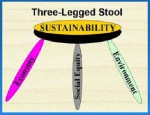 In writing an effective website posting, it is sometimes important to find a nugget of information that can simply drive home a point for a broader theme. In reviewing a 150 page United Nations document published this past February 2013, I think I may have found just such an informational nugget. The title of the Document is, “Sustainable Development Scenarios for Rio+20.”
 For some smart grid advocates, wireless smart meters are an integral part of implementing a “green agenda,” an agenda where advocates selectively “tune-out” or ignore mounting evidence that wireless emissions from smart grid-related devices can have adverse effects upon our biosphere and related ecosystems.
Practical RF Exposure Advice from C4ST and the Former President of Microsoft Canada
Frank Clegg is the former President of Microsoft Canada. He is now leading and building a national organization in Canada, Canadians (Citizens) for Safe Technology (C4ST), to raise public awareness of the potential health effects associated with electromagnetic radiation from wireless technology.
In December 2012, the staff of the Public Utility Commission of Texas (PUCT) published a report entitled, “Health and RF EMF from Advanced Meters.” Incidentally, this PUCT staff document was prepared with the help of Federal tax dollars.
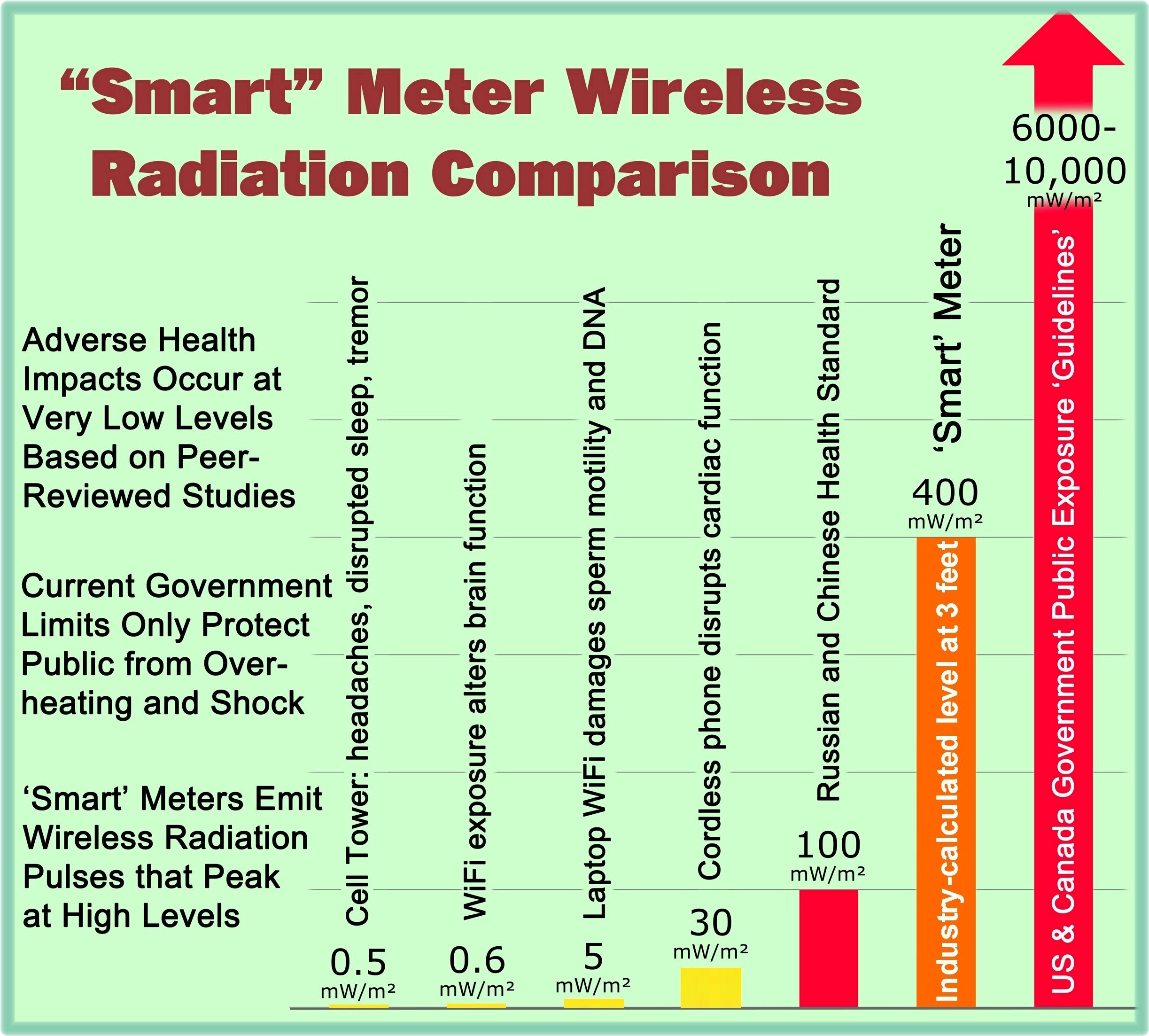
First of all, for the record, the International Agency for Research on Cancer (IARC) has declared that radiofrequency electromagnetic fields from all RF emission sources, including from wireless smart meters, are possibly carcinogenic to humans (Group 2B).
 In a discussion regarding agents classified as Group 2B Carcinogens by the IARC organization, the PUCT staff stated that if “smart meter opponents” mention one group of potentially carcinogenic substances (e.g., lead and DDT) without mentioning another group of substances (e.g., coffee, pickled vegetables, talc) then it “imparts a negative bias” that may “alarm and confuse.”
 To help understand why smart meter advocates appear so intent in forcing people to be exposed to RF radiation against their will (as well as exposed to increased privacy and other risks), it is instructive to first examine a somewhat simpler example scenario.




 Smart Grid Awareness