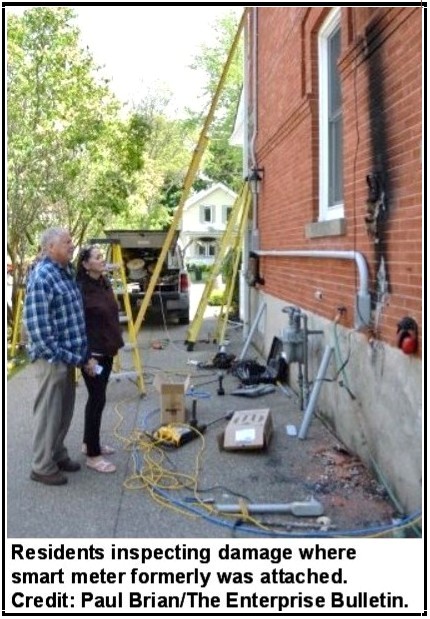
 Veronica Onyskiw woke up to the sound of her dog growling and a loud noise like a revving engine coming from outside her Beech Street home (in Ontario, Canada).
Worried someone was breaking in, Onyskiw tried to call police, but found the phone lines and power were out.
She then went outside to see a “ball of fire” as her smart meter on the side of her brick home exploded only feet away from the gas line.
Around 1:15 a.m., May 31, the smart meter at Onyskiw and her husband Jim Pulcine’s Collingwood home exploded for unknown reasons and was quickly extinguished by four Collingwood firefighters. There were no injuries.

 There has recently been increased recognition that smart meters are “not so smart.” People are finally catching on everywhere to the clever use of “smart” semantics that was more hype and propaganda than reality. Just within the past couple of days there have been two insightful articles/ news stories that will be summarized below.
 As it turns out, “smart meters” are not very smart. Horror stories are beginning to emerge in the U.K. where customers are being left in “billing limbo.”
 The latest issue of Metering & Smart Energy International devoted two pages to utility industry specialists answering “The BIG Question: Are smart meters living up to their promise?”
 Yesterday, May 12th, 2015, anti-smart meter activists in Maine filed an
  INDIANAPOLIS – State regulators have rejected a proposal from Duke Energy to raise customers’ rates. The Indiana Utility Regulatory Commission said Friday in a ruling that the company didn’t provide enough details for its $1.9 billion, seven-year plan.
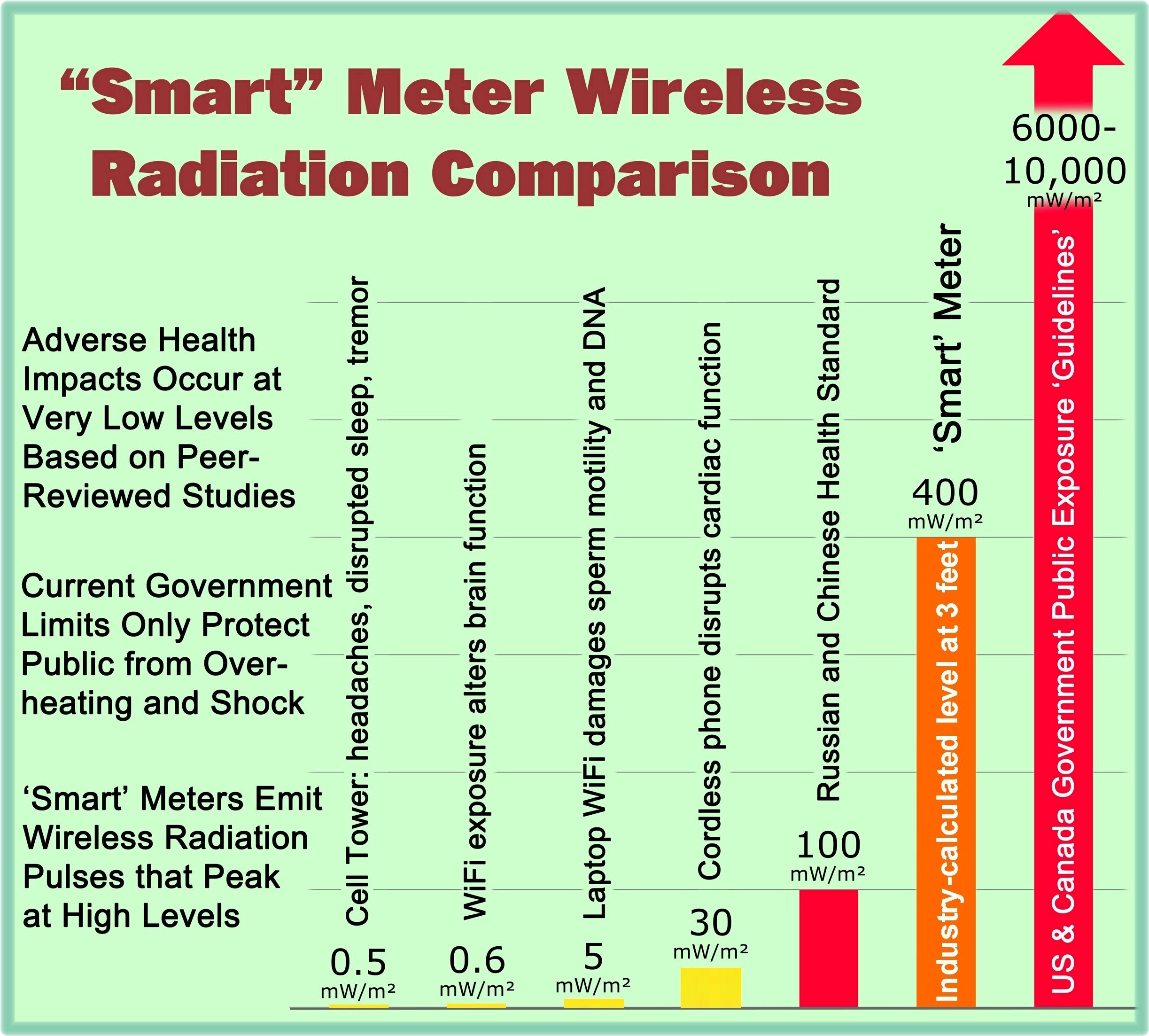
 New York, NY, May 11, 2015. Today 190 scientists from 39 nations submitted an appeal to the United Nations, UN member states and the World Health Organization (WHO) requesting they adopt more protective exposure guidelines for electromagnetic fields (EMF) and wireless technology in the face of increasing evidence of risk. These exposures are a rapidly growing form of environmental pollution worldwide.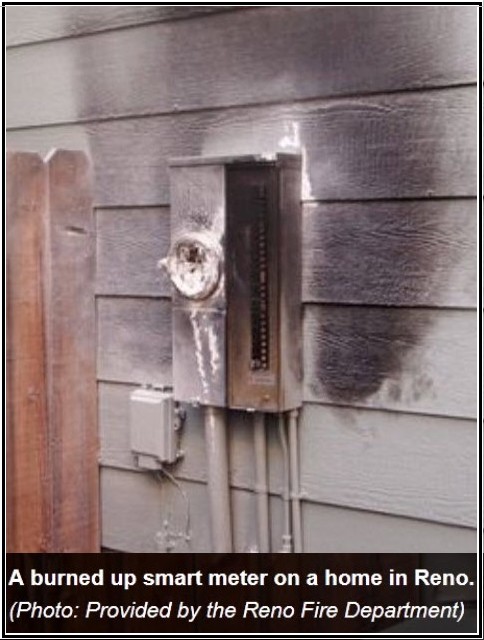



 Smart Grid Awareness